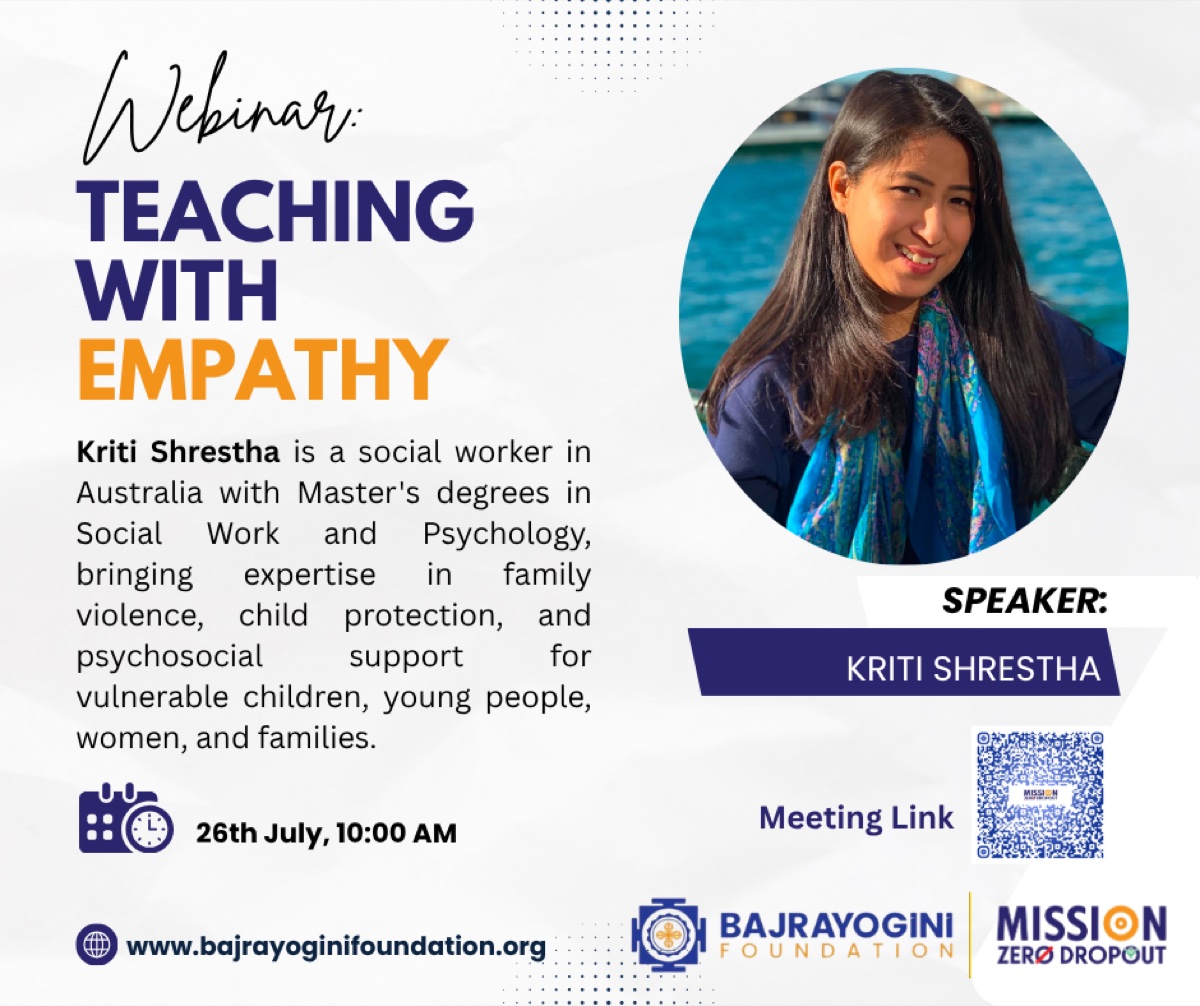
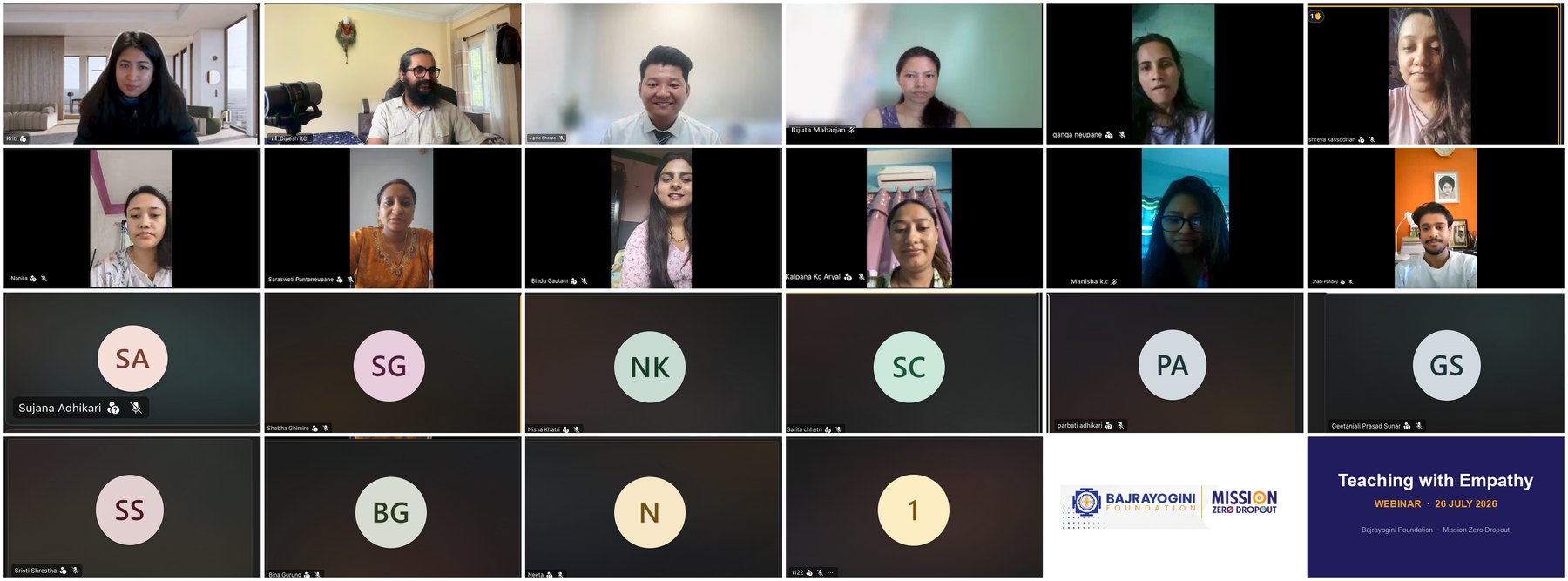
On July 26, 2026, Bajrayogini Foundation organized its first online session of this kind — a webinar on “Teaching with Empathy” — bringing together 37 teachers from Mission Zero Dropout centers, government schools, and partner private schools for a morning of practical, trauma-informed learning.
Why This Session
Many children supported by Mission Zero Dropout come from orphanages or experience limited parental care, with parents working abroad or migrating for employment. Others study in a second or third language, facing linguistic and cultural barriers that affect confidence and learning. These experiences of separation and instability often show up in the classroom as behaviour — and call for understanding rather than punishment.
About the Facilitator
The session was led by Ms. Kriti Shrestha, a social worker based in Australia with extensive experience in family violence and child protection. She holds a Master of Social Work from Australia and a Master of Arts in Psychology from Nepal, where she was a Tribhuvan University topper. Before moving to Australia, she worked as a psychosocial counsellor supporting children and young people in Nepal.
What the Session Covered
- Understanding behaviour as communication. Children’s actions should be read in the context of their age, stage of development, life experiences, and emotional needs — asking why a behaviour is happening before reacting to it.
- The impact of punishment. Punishment may stop a behaviour short-term, but it can leave lasting harm on children’s emotional well-being, relationships, and learning — shame, reduced trust, and fear of making mistakes.
- Positive alternatives. Participants explored consequences that are fair, proportionate, and related to the behaviour, alongside consistency and safe spaces that help vulnerable children build trust.
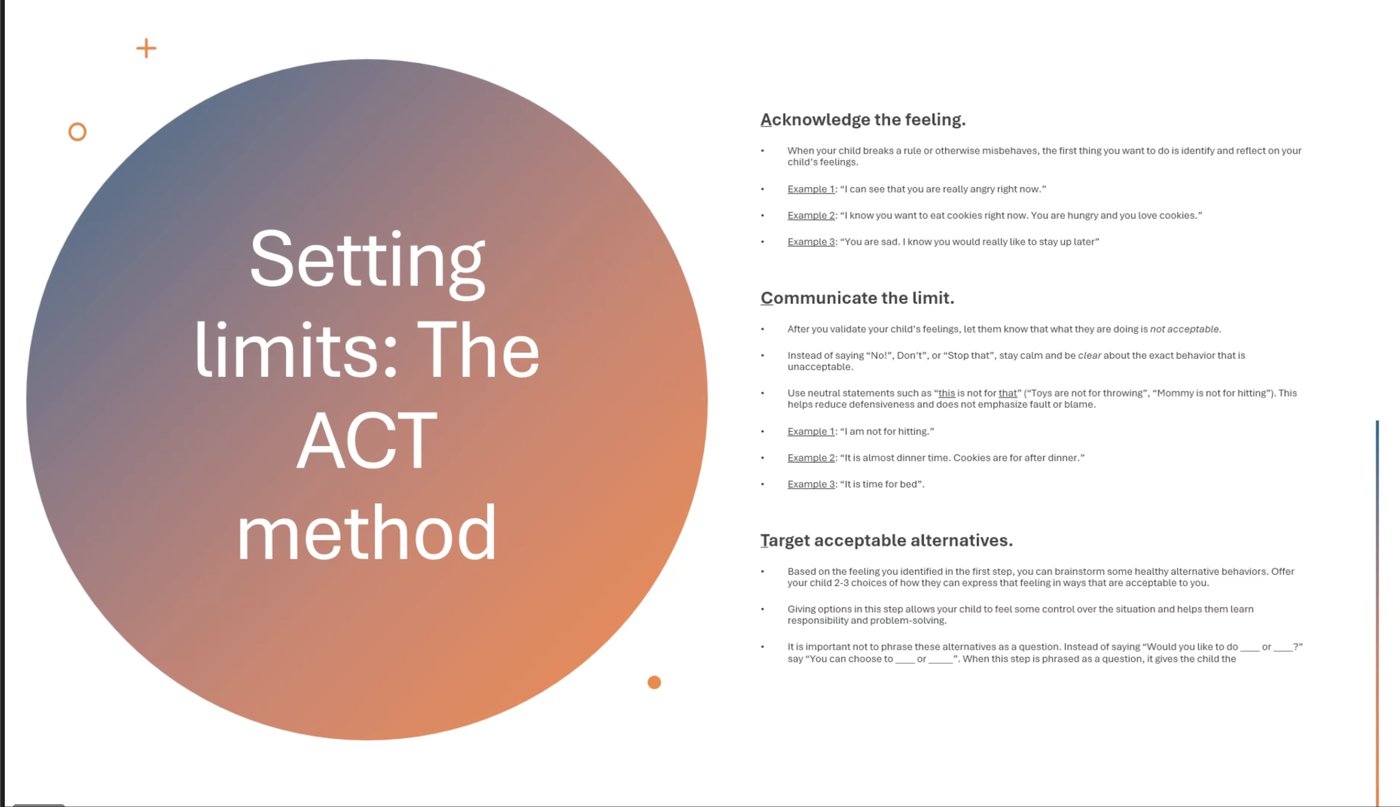
- The ACT method for boundary-setting. A practical three-step tool — Acknowledge the feeling, Communicate the limit, Target acceptable alternatives — paired with offering children choices that build accountability and problem-solving.
- Self-care for teachers. Adults who care for their own mental and emotional well-being are better able to support children — a reminder to “be kind to yourself.”
Participant Reflections
The session generated meaningful discussion on the realities of Nepali classrooms — from supporting slow learners and children with additional needs to addressing language barriers in early grades. Closing reflections on what teachers hope their students will remember brought heartfelt answers: a classroom where they felt safe, a teacher who listened, and lessons made simple with real-life examples.
Participants described the session as extremely useful, appreciating its practical relevance to daily work with children. One shared a key takeaway: “I will build positive relationships with my students to create a safe and motivating learning environment.” Another suggested future sessions be conducted in person for even more interactive learning.
Gratitude
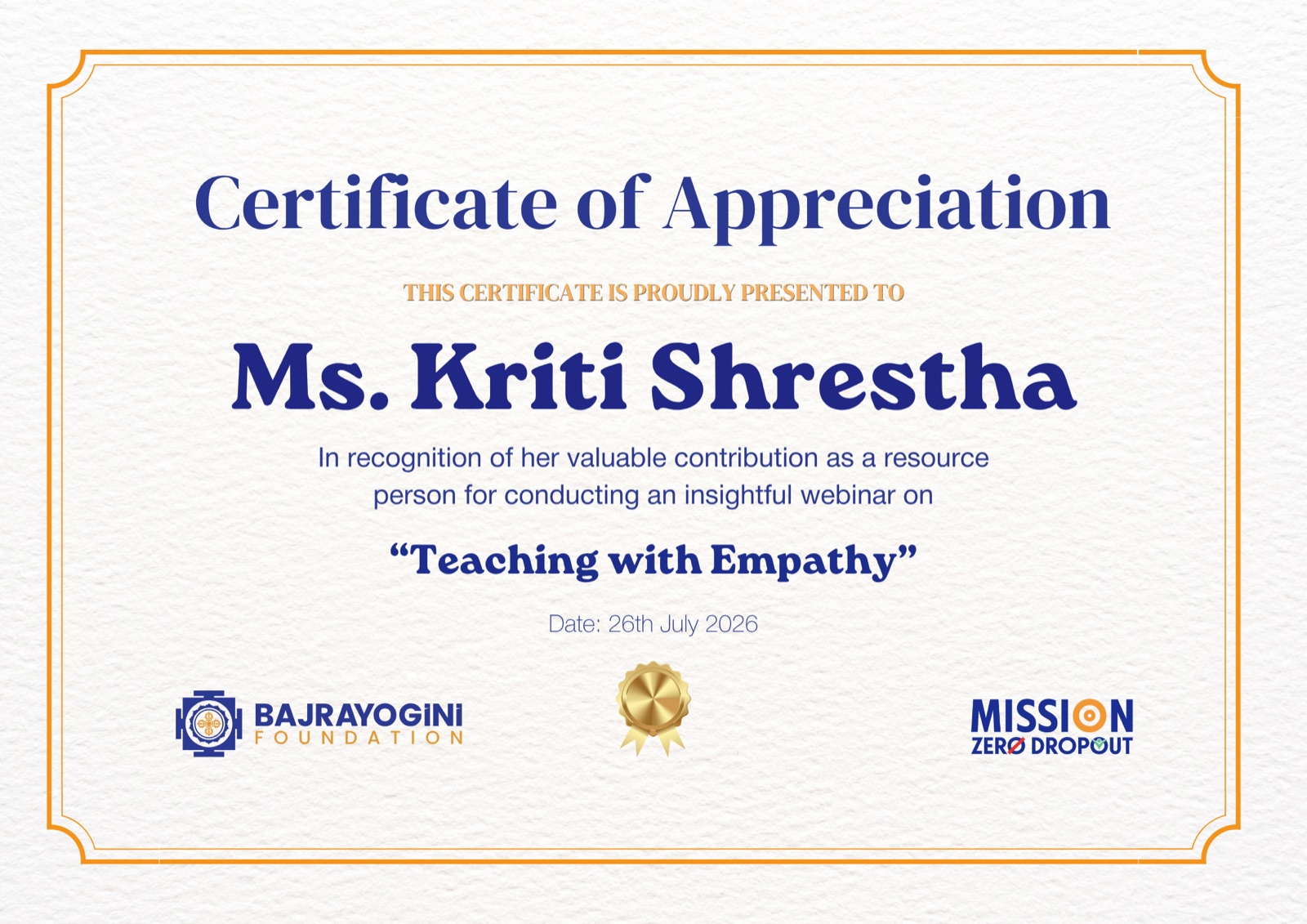
Bajrayogini Foundation extends sincere gratitude to Ms. Kriti Shrestha for generously sharing her expertise and practical insights, and to all participants for their active engagement and valuable feedback. Ms. Shrestha was presented with a Certificate of Appreciation in recognition of her contribution as the resource person for this session.
This webinar reinforces a core belief behind Mission Zero Dropout: empathy is not simply kindness — it is an essential approach to helping children who have experienced separation, instability, or other adversities develop resilience and reach their full potential. Bajrayogini Foundation looks forward to organizing more sessions that promote positive teaching practices and child-centered care.